
MAKE! Participants Reflect on Creativity, Community and Growth
Alicia Zapata, a second-year MAKE! participant and kindergarten through eighth grade art teacher at Waters Elementary School in Chicago; Kelly Wendel, an eighth-year participant and art teacher at Nicolet High School in Glendale, Wis.; and Gail Kowsky, a second-year participant and sixth- and seventh-grade art teacher in New Brighton, Minn., reflected on what they gained from this year檚 program.
For Zapata, MAKE! provides the time and space to nurture ideas that continue to develop throughout the school year.
淚 always say this program is planting seeds for my art practice and then for the rest of the year, I help make them grow,� she said. 淏eing able to be here and having the time and space to work and to have dialogue with other artists about my work, their work, the world and teaching is so valuable.�
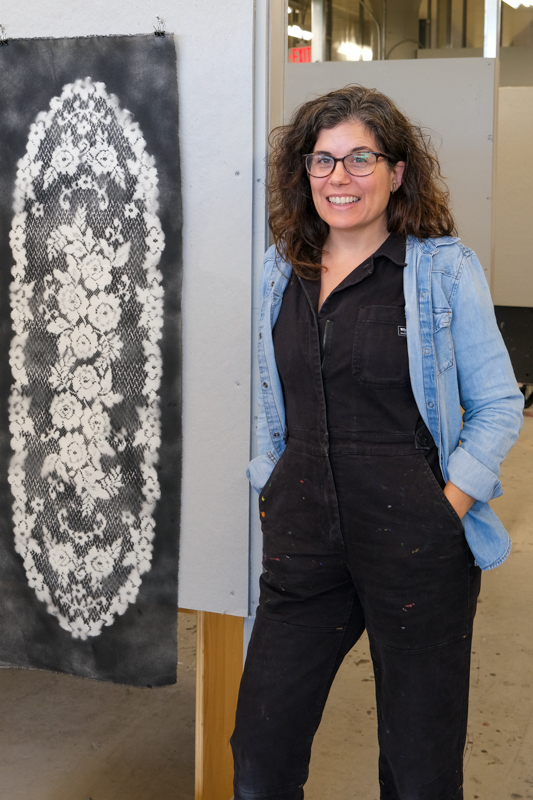
Alicia Zapata
Wendel said one of the program檚 greatest strengths is the creative freedom it offers.
淥ne of the biggest things I get out of this program is the freedom to come in either with a plan or without a plan and to still create on my own terms,� she said. 淚 can watch demos, talk with other art educators and professors, and then decide how I want to spend my studio time.�
Kowsky said the connections she builds with fellow educators are invaluable.
淎 lot of times we檙e by ourselves [as educators],� she said. 淚t檚 nice to gather in a space and talk about trends, what we檙e seeing in kids, what projects are working and what new materials people have found.�
She also appreciates how her personal artwork is supported and taken seriously.
淛ust having that extra level of input and connection and, you know, being taken seriously,� she said, 渋s really meaningful.�
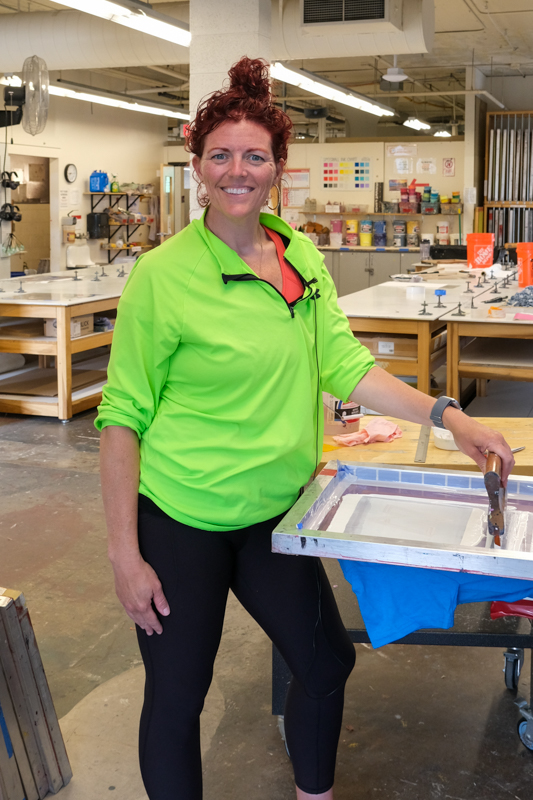
Kelly Wendel
Participants also reflected on the ideas and inspiration they’re most excited to take back to their classrooms and creative practice.
Zapata said she is leaving with a substantial body of work she can continue developing throughout the year while bringing new ideas and techniques back to her students.
淭he conversations with other educators plant so many seeds,� she said. 淵ou檙e talking about your work, then your classroom, then back to your work again.�
Wendel hopes to model creative risk-taking for her students.
淚 want my students to know that just because there are rules or expectations, it doesn檛 mean you should stop showing your voice. One big thing is finding things that you檙e passionate about,� she said. 淚t doesn檛 matter if other people don檛 like it or understand it. That檚 OK. It檚 for you.�
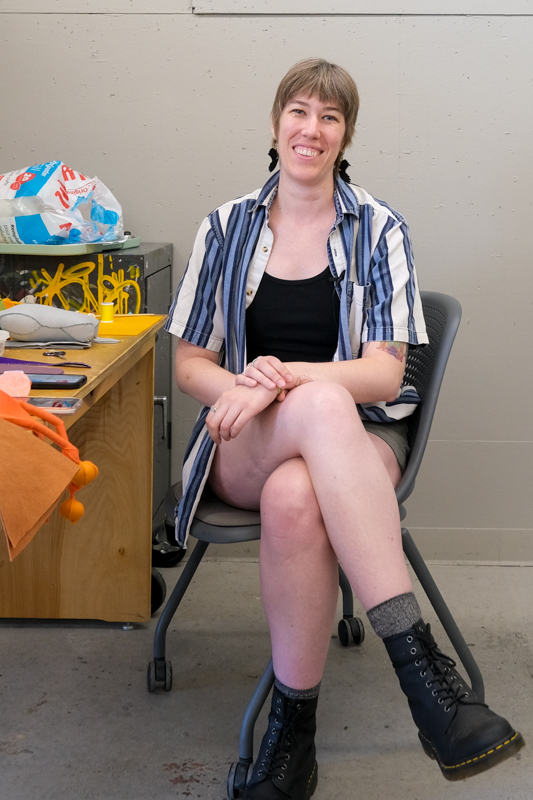
Gail Kowsky
For Kowsky, MAKE! is a reminder of both the importance of creative time and the challenges students face every day.
淚t puts us in a student mindset again,� she said. 淚t reminds us what it feels like to struggle, to be uncomfortable and to learn. That檚 where learning happens � in the discomfort.�
Learn more about 91精品檚 .
Alicia Zapata, a second-year MAKE! participant and kindergarten through eighth grade art teacher at Waters Elementary School in Chicago; Kelly Wendel, an eighth-year participant and art teacher at Nicolet High School in Glendale, Wis.; and Gail Kowsky, a second-year participant and sixth- and seventh-grade art teacher in New Brighton, Minn., reflected on what they gained from this year檚 program.
For Zapata, MAKE! provides the time and space to nurture ideas that continue to develop throughout the school year.
淚 always say this program is planting seeds for my art practice and then for the rest of the year, I help make them grow,� she said. 淏eing able to be here and having the time and space to work and to have dialogue with other artists about my work, their work, the world and teaching is so valuable.�
Wendel said one of the program檚 greatest strengths is the creative freedom it offers.
淥ne of the biggest things I get out of this program is the freedom to come in either with a plan or without a plan and to still create on my own terms,� she said. 淚 can watch demos, talk with other art educators and professors, and then decide how I want to spend my studio time.�
Kowsky said the connections she builds with fellow educators are invaluable.
淎 lot of times we檙e by ourselves [as educators],� she said. 淚t檚 nice to gather in a space and talk about trends, what we檙e seeing in kids, what projects are working and what new materials people have found.�
She also appreciates how her personal artwork is supported and taken seriously.
淛ust having that extra level of input and connection and, you know, being taken seriously,� she said, 渋s really meaningful.�
Alicia Zapata
Kelly Wendel
Gail Kowsky
Participants also reflected on the ideas and inspiration they’re most excited to take back to their classrooms and creative practice.
Zapata said she is leaving with a substantial body of work she can continue developing throughout the year while bringing new ideas and techniques back to her students.
淭he conversations with other educators plant so many seeds,� she said. 淵ou檙e talking about your work, then your classroom, then back to your work again.�
Wendel hopes to model creative risk-taking for her students.
淚 want my students to know that just because there are rules or expectations, it doesn檛 mean you should stop showing your voice. One big thing is finding things that you檙e passionate about,� she said. 淚t doesn檛 matter if other people don檛 like it or understand it. That檚 OK. It檚 for you.�
For Kowsky, MAKE! is a reminder of both the importance of creative time and the challenges students face every day.
淚t puts us in a student mindset again,� she said. 淚t reminds us what it feels like to struggle, to be uncomfortable and to learn. That檚 where learning happens � in the discomfort.�
Learn more about 91精品檚 .
News
Meet Maya Koehn and 2026 Senior Exhibition Project L橝telier
Maya Koehn �26 (Interior Architecture and Design) is a President檚 (Honor) List student from Sheboygan, Wis., currently employed as a Junior Designer at Direct Supply.
Meet Kaitlyn Powers and 2026 Senior Exhibition Project Solenne
Kaitlyn Powers �26 (Illustration major; Communication Design minor) is a self-described mixed media illustrator, graphic designer and textile artist. She is also a President檚 (Honor) List student from Appleton, Wis.
Meet Emily Camp and 2026 Senior Exhibition Project Predisposed
Emily Camp �26 (Animation Track in Illustration) is a President檚 (Honor) List student from Fox River Grove, Ill.
91精品 elects new trustees Paul Fletcher and Jacqualyn Laughlin
Paul Fletcher, a principal product designer at LinkedIn, and Jacqualyn Laughlin, co-founder of Invisible Ink Partners, were elected members of the Milwaukee Institute of Art & Design檚 Board of Trustees at the college檚 annual meeting in June.
Double ASID award winner is inspired by nature and internships
Rising senior at the Milwaukee Institute of Art & Design (91精品) Adam Wold �27 received two awards in May from the American Society of Interior Designers (ASID). The Interior Architecture and Design (IAD) major won the Silver Award in the Commercial category and the Bronze Award in the Residential category.